
 Program
 YouTube
 Instagram
 Facebook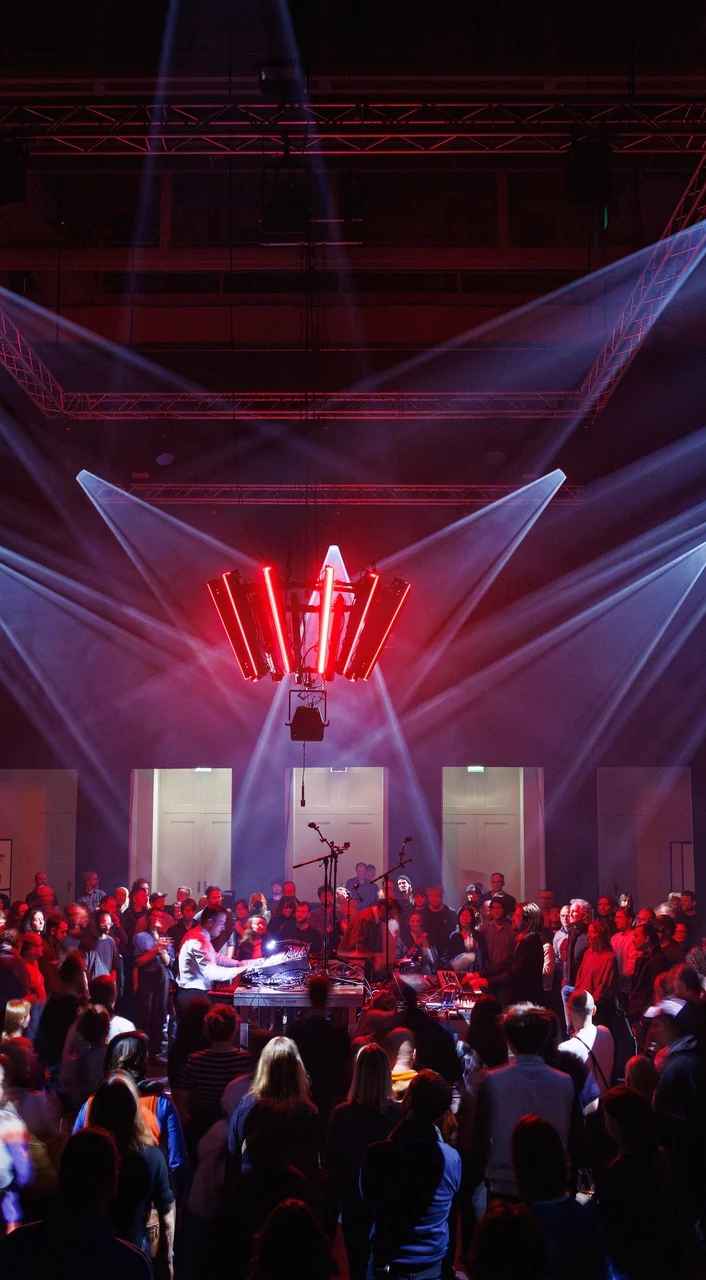


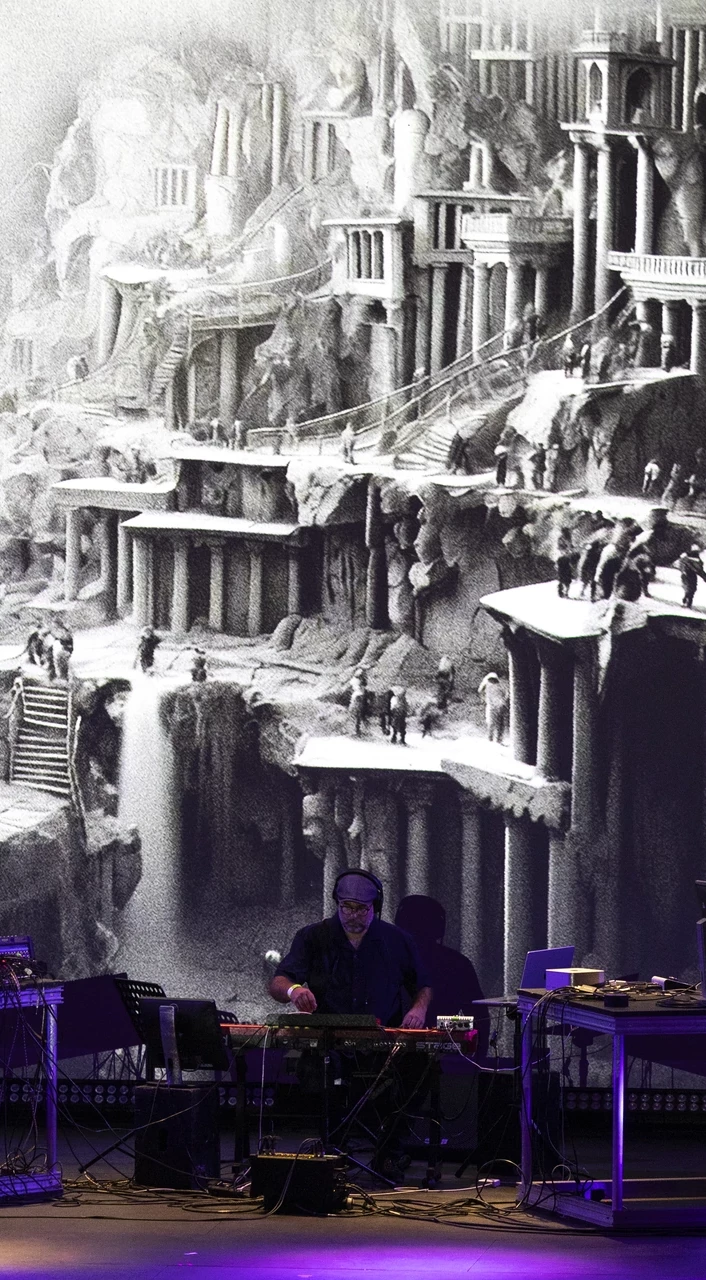
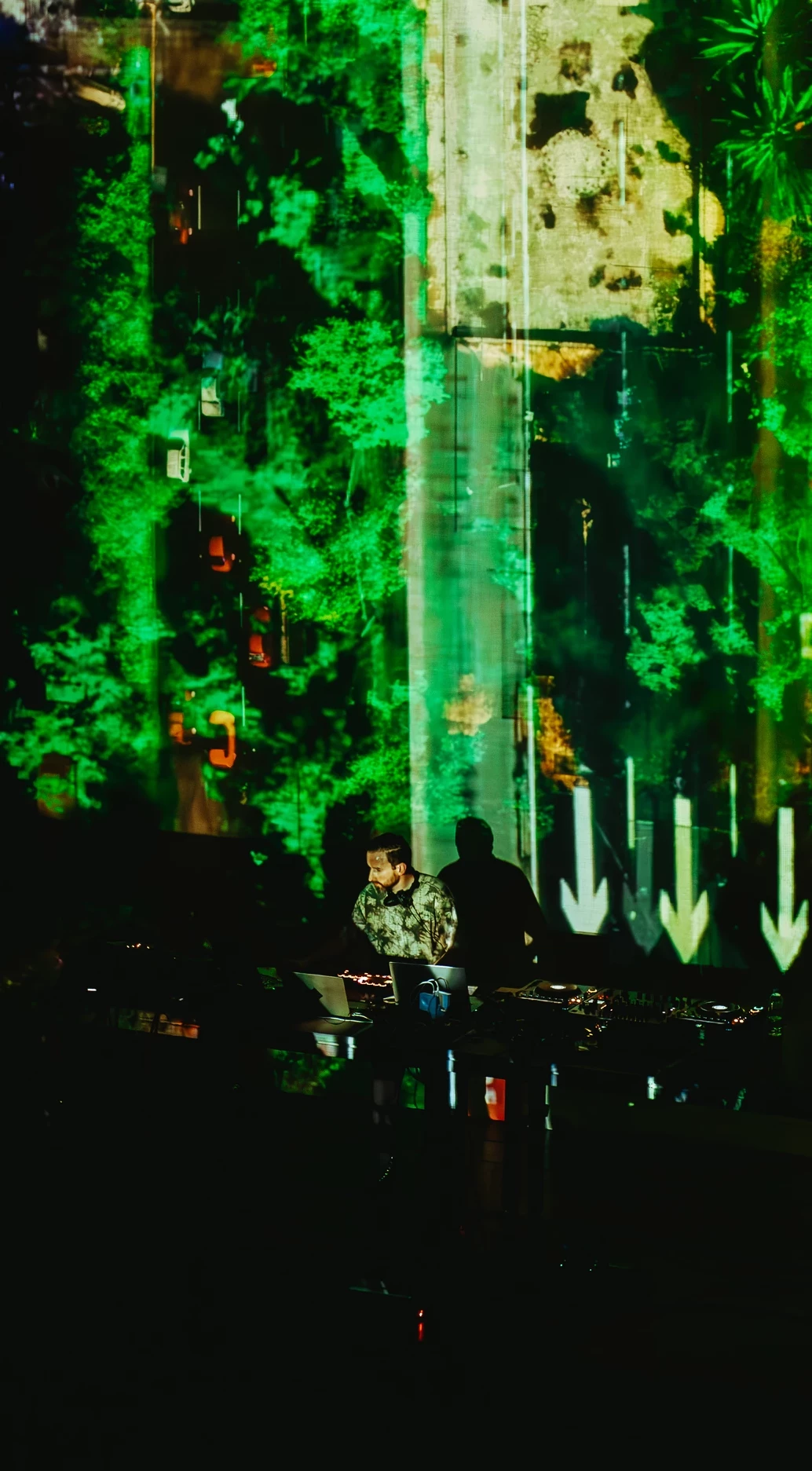
For a melodic start to 2027, Happy New Ear promises extraordinary listening experiences once again with its complex “Immersive Sounds Setting” in the Main Stage of the Festspielhaus. Following the successful first collaboration with the “Postdigital Interpretation” research project at the Cologne University of Music and Dance during Happy New Ear in January 2026, another concert will take place in 2027 as part of this partnership, featuring musicians from the Nadar Ensemble.
The internationally acclaimed ensemble promotes both contemporary music and young composers and is known for developing new concert formats and exploring cutting-edge technologies. For the concert in January 2027, the Nadar Ensemble, together with students from the Beil and Muntendorf classes, will spend several days in the fall of 2026 in HELLERAU’s studios and Spatial Sound Settings to develop, test, and rehearse new concepts and compositions.
With its focus on “Immersive Sounds” and numerous commissioned works, residency projects, and concerts by internationally pioneering artists and ensembles—alongside partner institutions such as IRCAM Paris, ZKM Karlsruhe, and MUTEK Montreal—HELLERAU has established itself as a hotspot for hybrid spatial sound concepts. With experimental next-generation projects such as this collaboration with the Cologne University of Music and Dance, HELLERAU is taking another exciting step toward the cross-media expansion of classical concert formats.
Biography
The Nadar Ensemble was founded in 2006 by a group of young musicians in Belgium. The ensemble’s name was chosen in reference to the pseudonym “Nadar” used by Gaspard-Félix Tournachon (1820–1910), whose multidisciplinary and adventurous approach serves as a model for the ensemble. The historical Nadar was not only a well-known photographer and balloonist, but also a caricaturist, spy, and art critic, and he regularly organized informal “salons” to which he invited artists, philosophers, and scientists.

Funding
“Postdigital Interpretation” is a project run by the Cologne University of Music and Dance with the support of the “Innovation in Higher Education” Foundation.



 Angelus LuminisFreunde der italienischen OperAngelus LuminisAlbum Release Konzert03.10.2026MusicExhibitions
 Dienstagssalon with Max Rademann & SuperbusenDienstagssalon with Max Rademann & Superbusen13.10.2026MusicTalkDienstagssalon
 Three in One: Perception – sensory perceptionStock, Wettin, Lisa, StolteThree in One: Perception – sensory perception10.11.2026Music
 A concert in honor of Jörg WidmannStaatskapelle DresdenA concert in honor of Jörg Widmann13.11.2026MusicTalk
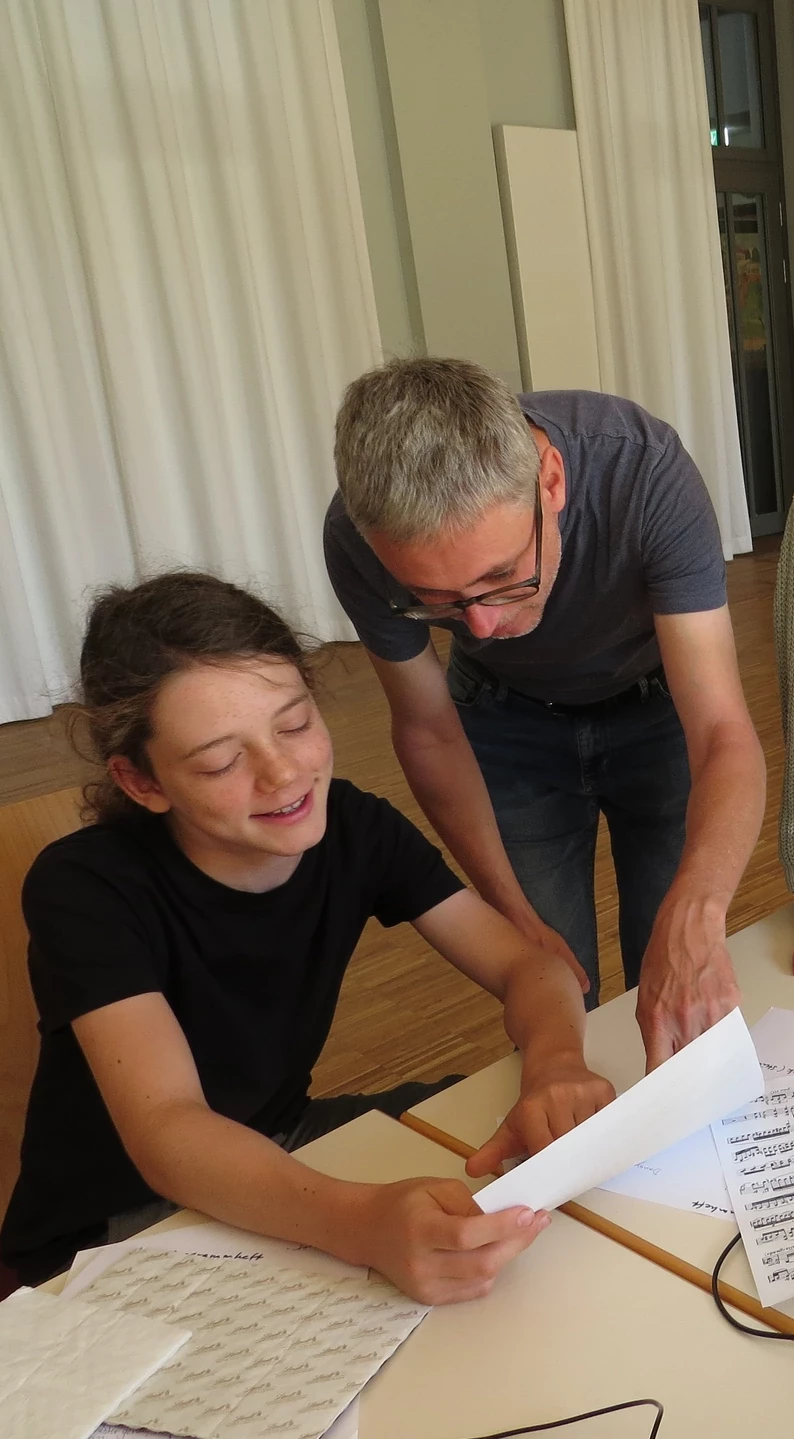 Walfisch und BriefwaageKomponistenklasse Dresden & Klangkollektiv Opus EinsWalfisch und BriefwaageNew Music by Children and Teens14.11.2026Music
 Alfred Hitchcock’s PsychoOrchester der Staatsoperette DresdenAlfred Hitchcock’s Psycho21.01.2027MusicFilm