
 Program
 YouTube
 Instagram
 Facebook


Hellerau, Scenes from Dresden and the 1990s. Collections and Unconventional Archives
After years of military use, the Festspielhaus Hellerau became, in the early 1990s, a place where collaborative activities—programs, performances, exhibitions, and festivals across all disciplines—were initiated by artists, curators, and architects in order to find a renewed cultural perspective and well-founded concepts. International connections and the integration of East and West in the programs revealed energies that can be linked to other new beginnings in Dresden during the 1990s (and shortly before). These scenes, which are of great significance for the city’s cultural history after 1989, are documented in many private and untapped press and similar collections. What remains, and how relevant are these collections to the present? What do they reveal about the conditions of transformation, the interconnections between various spheres of activity during this period, and the openness of the participants? How can these collections be organized into one or more archives and linked together?
The process of reviving the knowledge and experiences from that period has already taken place in two phases: In 2015, an initial exhibition titled “Utopia Existence Utopia: Recultivation of the Festspielhaus 1990–2006,” curated by Claudia Reichardt (Wanda) (in collaboration with Demuth, Gorgas, a video by Lubich, and others), which brought together materials on artistic and curatorial programming. In 2025, Hellerau – European Center launched a programmatic focus on the 1990s, including an exhibition featuring interviews with key figures from that era. How and where will the material generated through further layers of engagement with this history (or these histories) be directed, and how can it become part of an ongoing archiving process?
The Salon aims to take these movements in history and reactivation as a starting point to stimulate and contribute to a mapping of the resulting private or semi-public collections, as well as to gather arguments, ideas, and proposals on how this knowledge could be consolidated and made accessible in the long term.
To register, please write: franz-anton.cramer@hmt-leipzig.de
 Partitur des KörpersKatja ErfurthPartitur des KörpersDedicated to the dancer and choreographer Noa Eshkol30.10.2026DanceAudio descriptionFragments of Life and Art
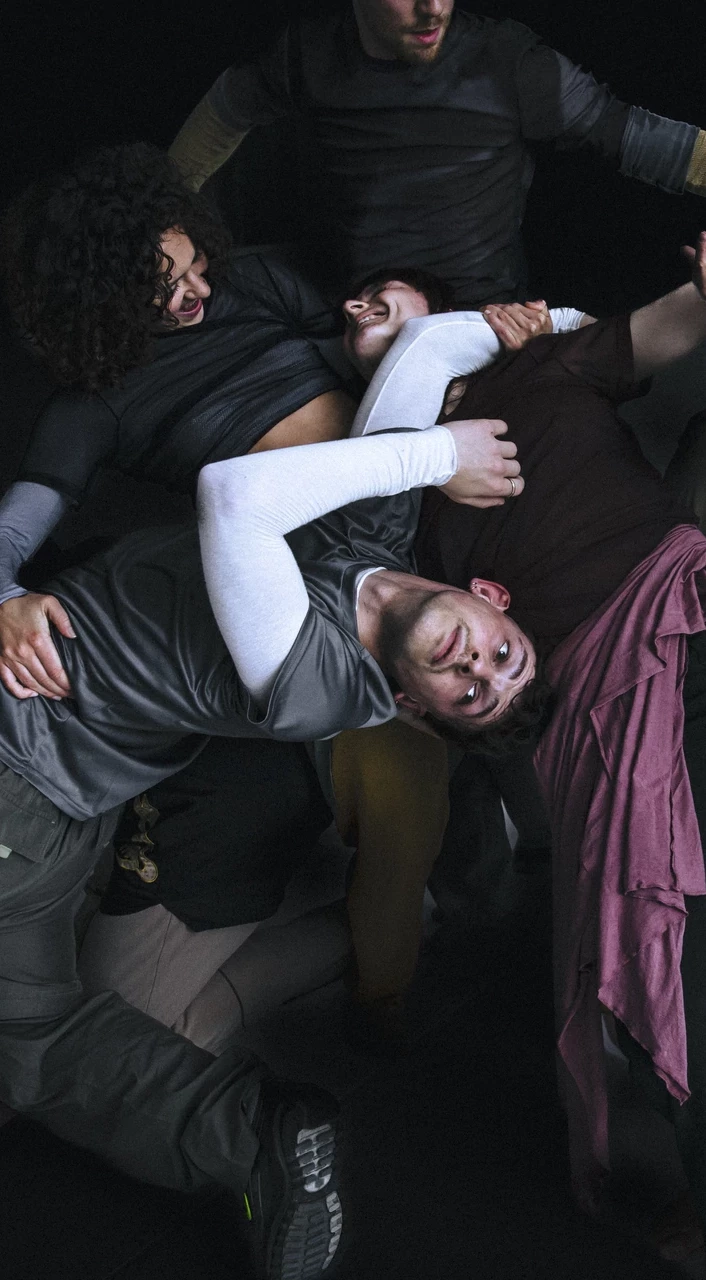 Down the RoadDresden Frankfurt Dance CompanyDown the RoadWorks by William Forsythe & Cyril Baldy11.12.2026DanceDresden Frankfurt Dance Company