

 Program
 YouTube
 Instagram
 Facebook


Noa Eshkol (1924–2007), an Israeli dancer, choreographer, and artist of Ukrainian-Jewish descent, developed an analytical-geometric movement notation system that transcribed dance like a musical score. In her piece “Partitur des Körpers” (Score of the Body), Katja Erfurth explores Eshkol’s artistic journey, examines her choreographic principles, and integrates them into her own dance practice. As a student of Gret Palucca, Katja Erfurth has been engaged for many years with the history of dance, particularly with Mary Wigman and her school in Dresden, from which Palucca emerged. One of Palucca’s colleagues, Tile Rössler (Tehila Ressler), was forced to leave the Palucca School and Germany in 1933 because she was Jewish, and went on to teach in Tel Aviv after 1933. She serves as the link to Noa Eshkol. Eshkol further developed the origins of expressive dance with an unwavering interest in transcribing dance through a highly complex notation system and, conversely, in analyzing and reflecting on that notation.
Biography
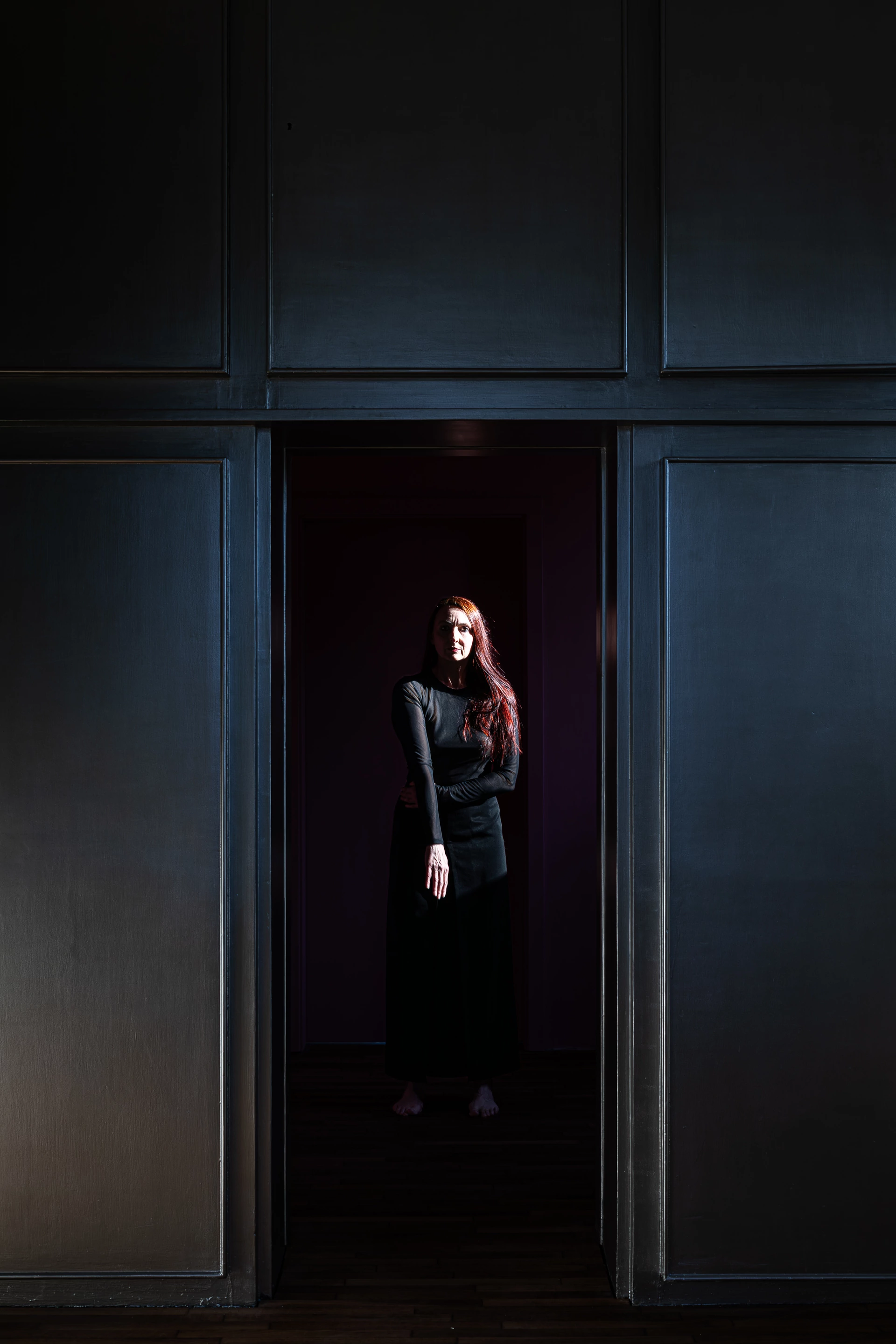
Photo: Volker Metzler
Katja Erfurth trained as a dancer at the Palucca School in Dresden. Her first professional engagement took her to the Saxon State Opera in Dresden. Since 1997, she has worked as a freelance dancer, choreographer and teacher. She is Chair of the Board of the Villa Wigman Association for Dance and a member of the management team at villa\wigman. In 2020, Katja Erfurth was awarded the Art Prize of the State Capital of Dresden.


Cast & Credits
| Artistic Director, Choreographer & Dancer | Katja Erfurth |
| Dance | Amit Abend, Seraphine Detscher, Helena Fernandino |
| Installation | Sabine Köhler |
| Violin | Florian Mayer |
| Composition | Paul Ben-Haim, Helmut Oehring |
Funding
In cooperation with Jewish Week Dresden. Supported by the Cultural Foundation of the Free State of Saxony as part of TACHELES 2026 – Jewish Life in Art and Culture, the City of Dresden – Office for Culture and Historic Preservation and the Dresden Foundation for Art & Culture of the Ostsächsische Sparkasse Dresden.