
 Program
 YouTube
 Instagram
 Facebook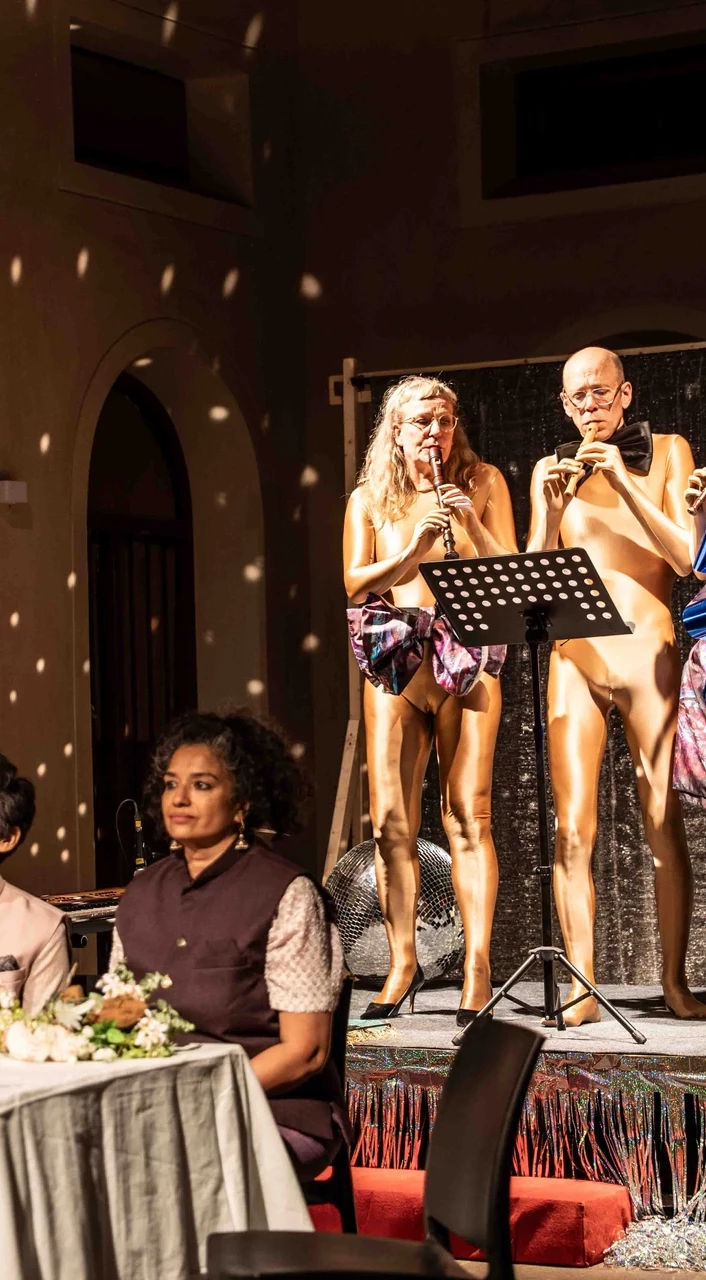
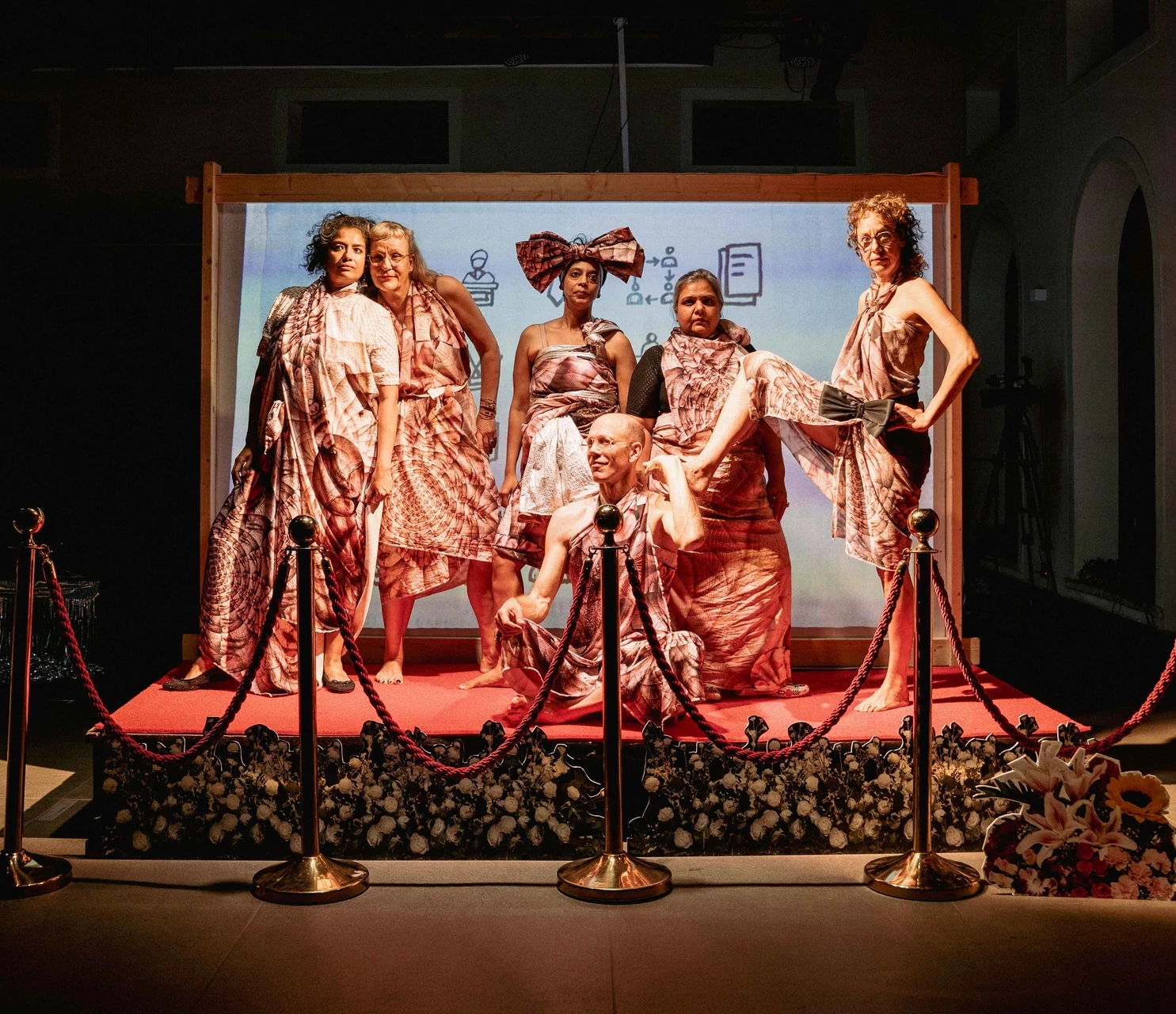
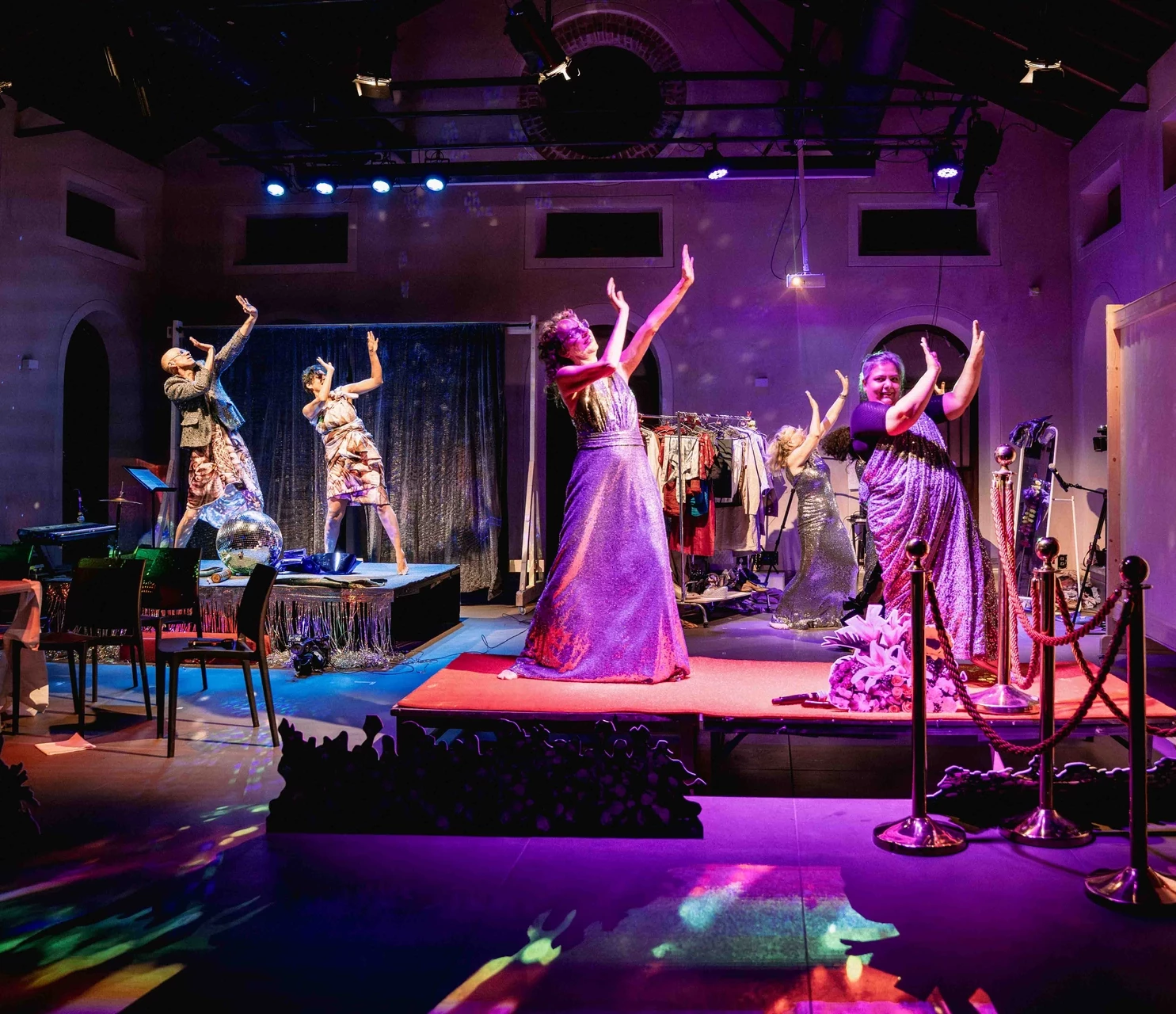
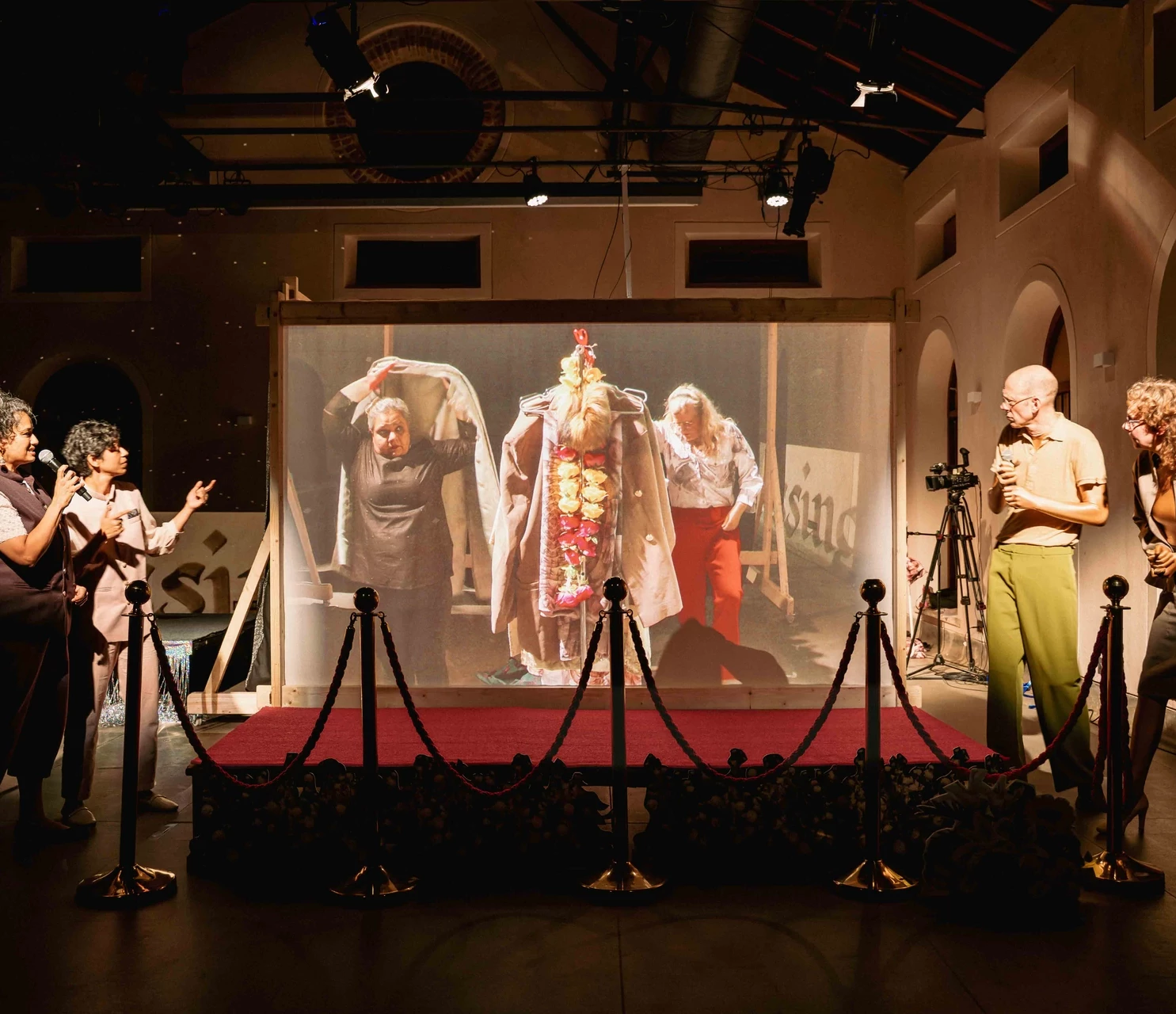
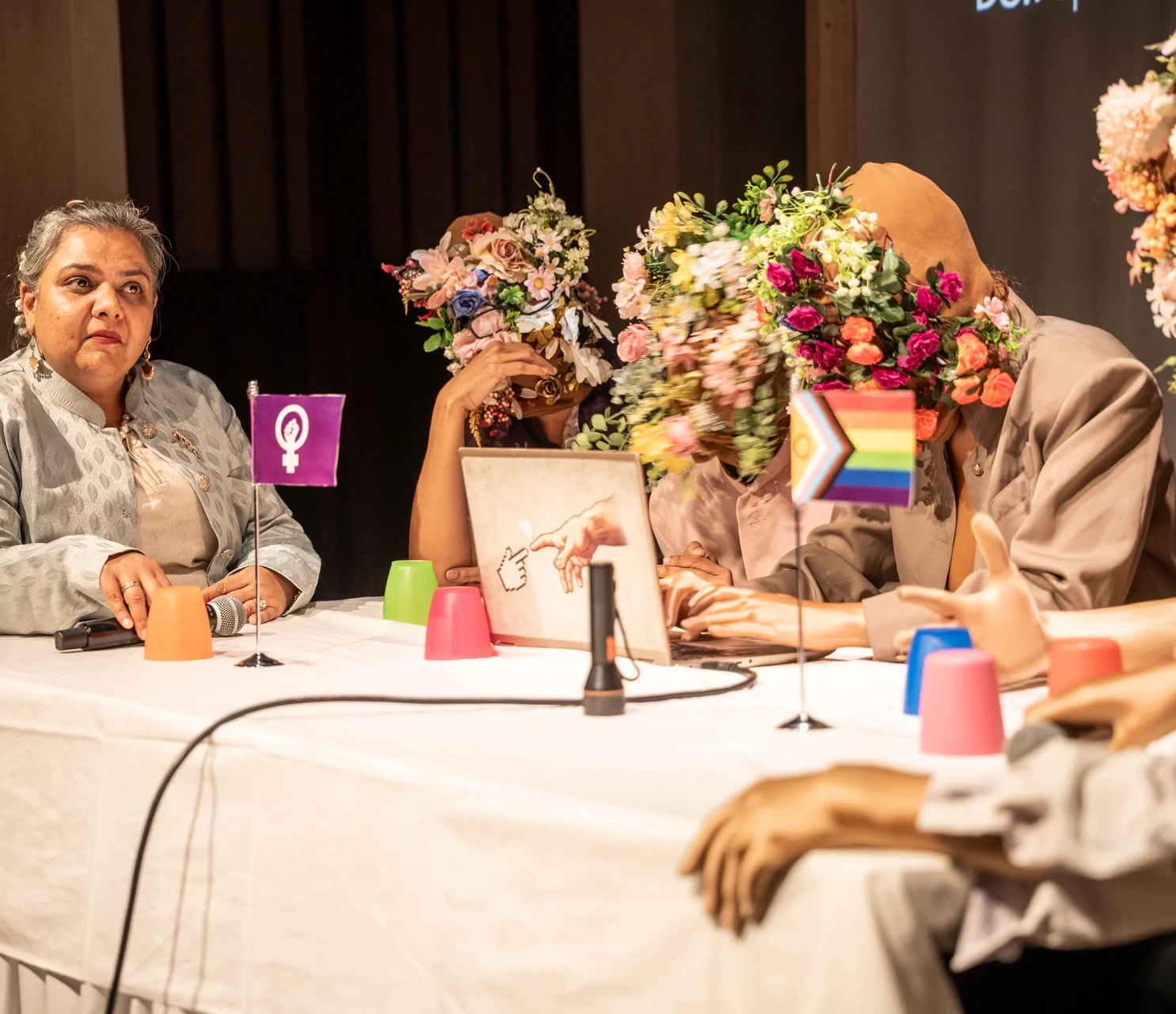
In “Wait To Be Seated”, two feminist collectives from Bangalore and Berlin come together to examine the laws of hospitality. The diplomatic protocol - its embarrassing observance as well as deliberate transgression - serves as a template for an exchange in which we become each other's host or guest and thus simultaneously a challenge, a promise and a burden.
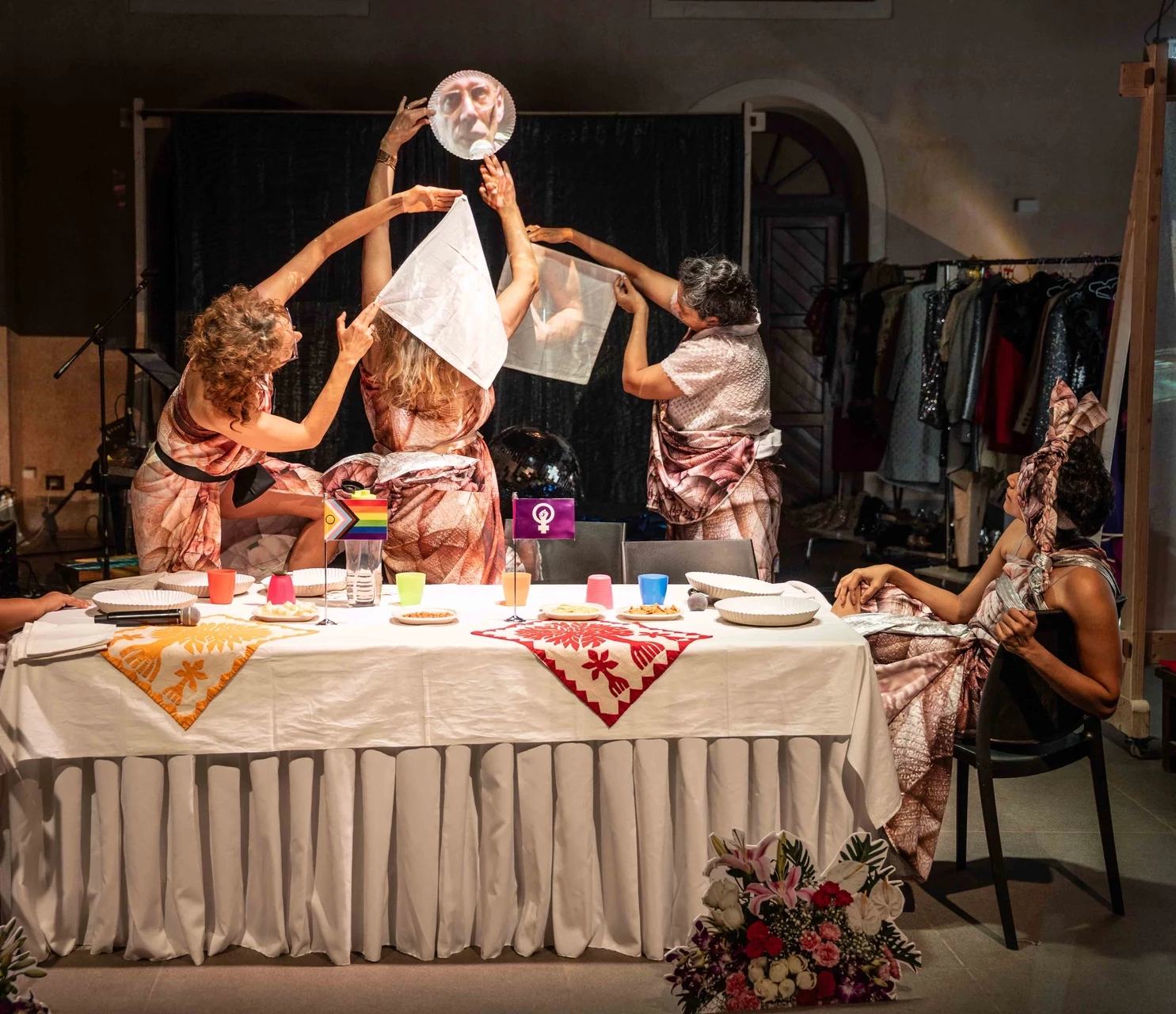
“Atithi Devobhava” means “The guest is like a god” and is often said in India. “The door is open, dear guest, come in” is a famous phrase in the Indian region of Karnataka. We can't think of a similarly inviting saying in German. Beyond such grand gestures, there is a dense network of rules and codes, especially in diplomatic and transnational contexts, in which hosts and guests can easily become entangled. Nowhere are these rules comprehensively written down, they are contradictory and change depending on the person, place, time and context. And yet: a good hostess will never break any of the rules! Who do these unwritten laws protect and from what? What remains when we leave formality behind? What if gender, race and colonial history are also at the table? What are we allowed to ask of each other - and how do we say no?
“Wait To Be Seated” creates a course of hospitality with a dining table, red carpet and dance floor in an enraptured nowhere. She She Pop and Sandbox Collective approach each other from opposite sides, carefully but relentlessly, meeting in the middle and opening up a new horizon.
Press Reviews
- “The entire evening unfolds in a series of different stages of social interaction (…). Anyone familiar with the feeling of awkwardness (…)—or simply anyone who wants to sit back, relax, and watch others struggle socially—will find this thoroughly enjoyable (…). They don’t reach a resolution. But far more interesting than a solution is the journey toward it, and that is well worth seeing.” (Nachtkritik, Iven Yorick Fenker)
- “The production is colorful and funny. The glitter of Bollywood hangs over the set, (…) playing with the codes of politeness and hospitality, with dress codes and the rules of diplomatically sidestepping conflict zones. But also a great deal with what one thinks one knows, with the imaginings about the other country that already seem a bit unsettling the moment one utters them.” (Taz, Katrin Bettina Müller)
- “It was like a kind of game—how we interact with one another, how we invent rituals to perhaps overcome the strangeness to some extent and find common ground. And that really worked in a very relaxed and beautiful way that evening.” (Deutschlandradio / Fazit, André Mumot)
Biographies
She She Pop is a Berlin-based feminist performance collective that uses its own biographies to deal with current issues and always creates a very lively stage atmosphere by involving the audience. The group is one of the most prominent and influential in the German theater scene, has received many awards and successfully tours its plays internationally.

Sandbox Collective is a women-led feminist performance collective based in Bangalore. Formed in 2013, it aims to make art more accessible while working at the intersection of gender and performance. Over the years, the group has acted as producers, curators, performers and festival hosts across India and internationally. Their work is shaped by an evolving understanding of art’s social responsibility and a commitment to compassionate, community-run artistic spaces.
 © Richa Bhavanam
 © Richa Bhavanam
 © Richa Bhavanam
 © Richa Bhavanam
 © Richa Bhavanam
Funding
A production by She She Pop and Sandbox Collective in co-production with HAU Hebbel am Ufer Berlin, Kampnagel Hamburg, Künstler*innenhaus Mousonturm, FFT Düsseldorf, HELLERAU – Europäisches Zentrum der Künste, Kaserne Basel und SPRING Festival Utrecht. Supported by: Adishakti Laboratory for Theatre Art Research (Pondicherry) and Theaterhaus Berlin.
Funded by the Kulturstiftung des Bundes (German Federal Cultural Foundation). Funded by the Beauftragter der Bundesregierung für Kultur und Medien (Federal Government Commissioner for Culture and the Media). And founded the City of Berlin – Department for Culture and Social Cohesion Berlin. This production was supported by the Goethe-Institut / Max Mueller Bhavan Bangalore as part of the project Space for Freedom and Feminism.