
 Program
 YouTube
 Instagram
 Facebook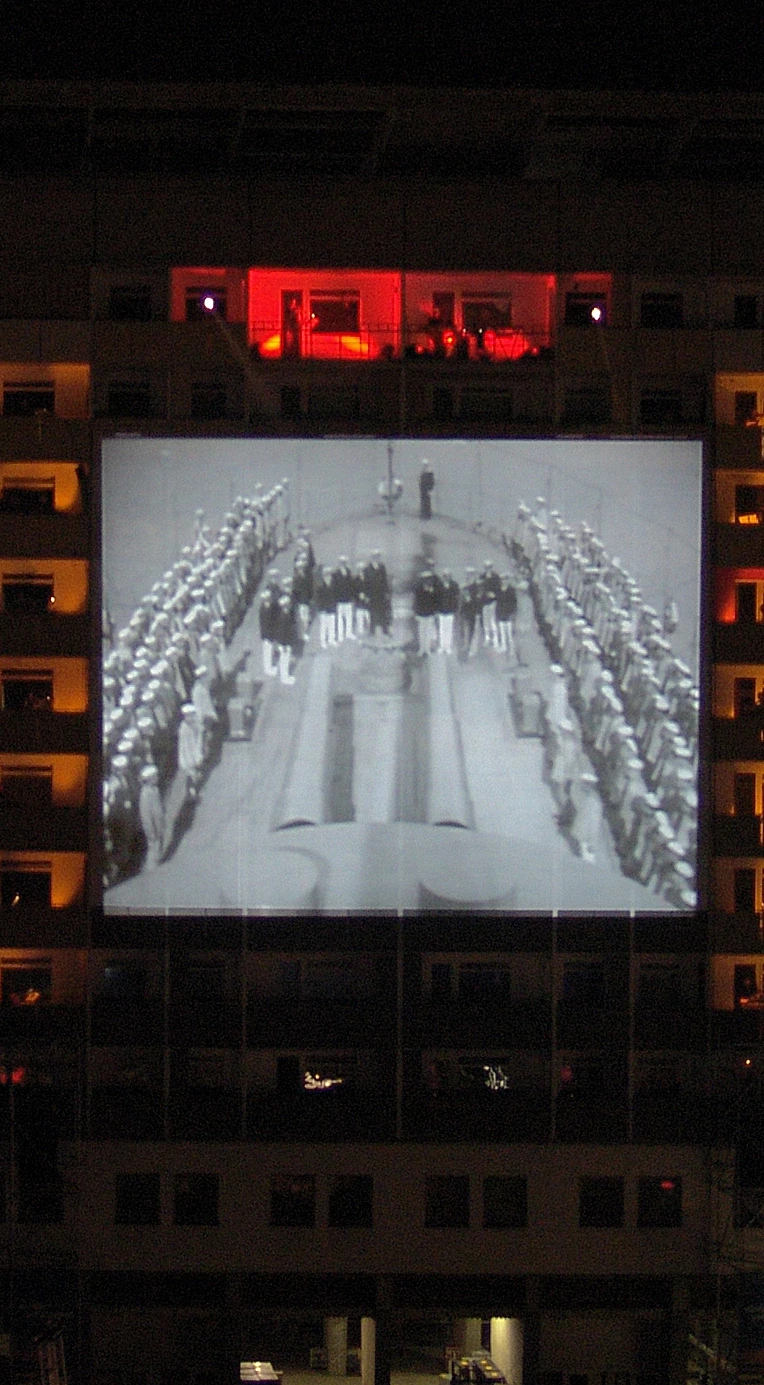
In 1925, Sergei Eisenstein's silent film “Panzerkreuzer Potemkin” (Battleship Potemkin) celebrated its premiere as an agitprop work to commemorate the 1905 revolution in Moscow and in 1926 in Germany. Eisenstein, who staged Wagner's “Valkyrie” in Moscow in 1940 as a climax in honor of the Hitler-Stalin pact, shows clear references to Wagner's concepts with this film and its techniques of rhythm, montage and monumentality. With rapid editing techniques and associatively inserted images, he succeeds in captivating the audience in an unprecedented way. The famous “Odessa staircase sequence”, in which rhythmic, often shockingly edited shots not only convey the plot but also deliberately create emotional effects, became a lesson in modern film language. With its innovative visual dramaturgy, symbol-laden iconography and cuts that still have an impact today, “Battleship Potemkin” is considered one of the style-defining masterpieces of film history.
The film was initially shown without original music, with works by classical composers such as Beethoven and Tchaikovsky. However, Eisenstein wanted each generation to develop its own music for his film. The first film score, composed by Edmund Meisel in 1926, was followed by numerous other versions. In 2004, Neil Tennant and Chris Lowe, now icons of synthpop as the Pet Shop Boys, decided to compose their own film score to Eisenstein's masterpiece. The project, orchestrated by Torsten Rasch, was premiered together with the Dresdner Sinfoniker under the direction of Jonathan Stockhammer in 2004 in Trafalgar Square in London and in 2006 in a concept by Sven Helbig and Markus Rindt as a “high-rise symphony” on the high-rise balconies of Prager Straße in Dresden.
To mark its 100th anniversary, the 2025 re-release of “Panzerkreuzer Potemkin” (Battleship Potemkin) will be presented alongside a documentary film of the performance of “Hochhaussinfonie” in HELLERAU.
Programme
| 20:00 Main Stage | „Panzerkreuzer Potemkin“ (Battleship Potemkin) (Directed by Sergei Eisenstein, Music by the Pet Shop Boys, 2025) |
| Intermission Dalcroze Hall | Intermission talk with Heleen Gerritsen (Artistic Director, Stiftung Deutsche Kinemathek) and Markus Rindt (Artistic Director, Dresdner Sinfoniker), moderated by Moritz Lobeck (Program Director for Music/Media Art, HELLERAU) |
| 22:00 Main Stage | „Hochhaussinfonie“ (Written and directed by Bettina Renner, Music by the Pet Shop Boys, Robert and the Roboters, and the Dresdner Sinfoniker, 2017) |
In collaboration with the Dresdner Sinfoniker and the Stiftung Deutsche Kinemathek.